9 hr
Rio Highlights: Christ the Redeemer, Sugarloaf & Selarón Steps
Full-day adventure to Rio's iconic landmarks with optional Brazilian BBQ and panoramic cable car views
Reserve
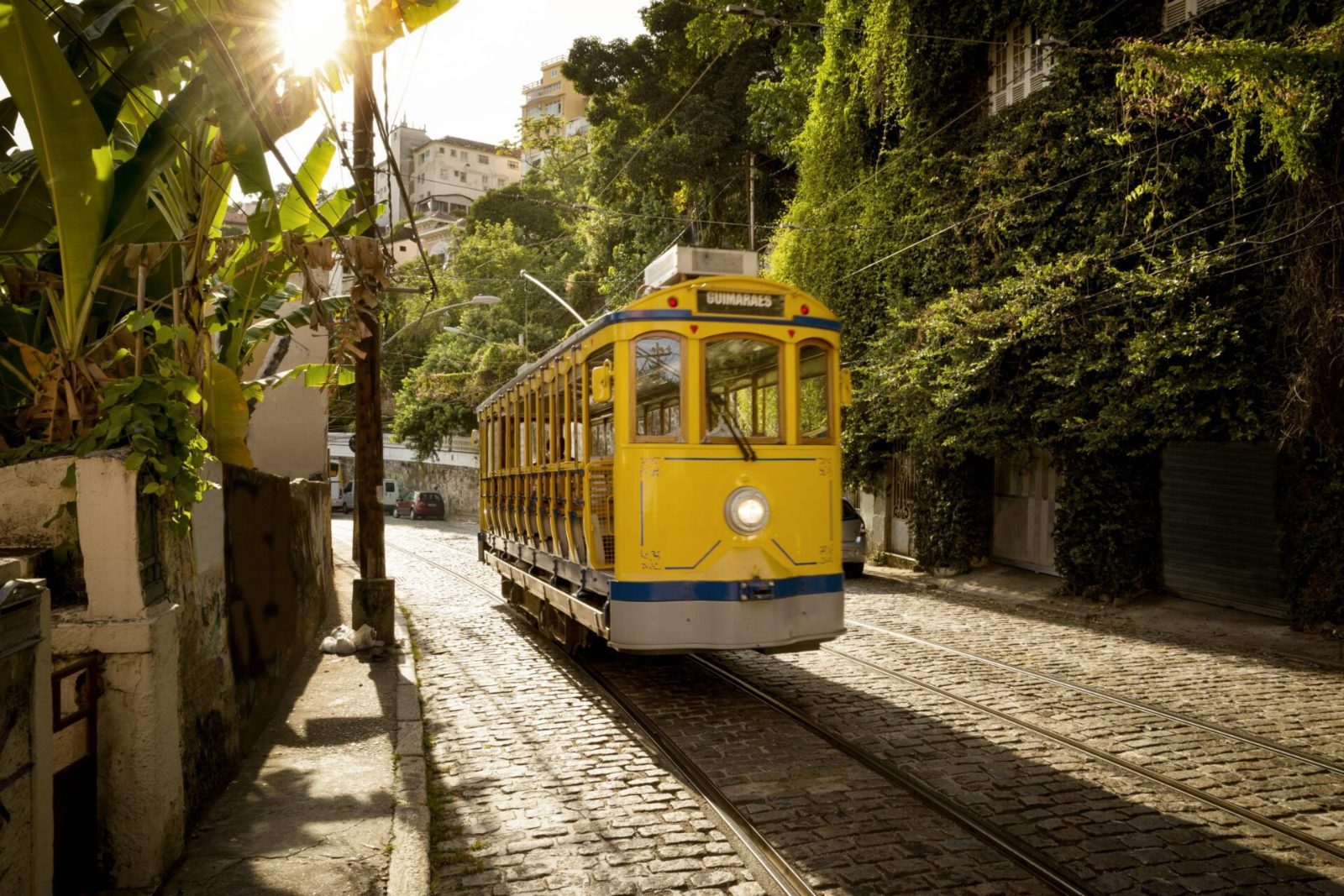
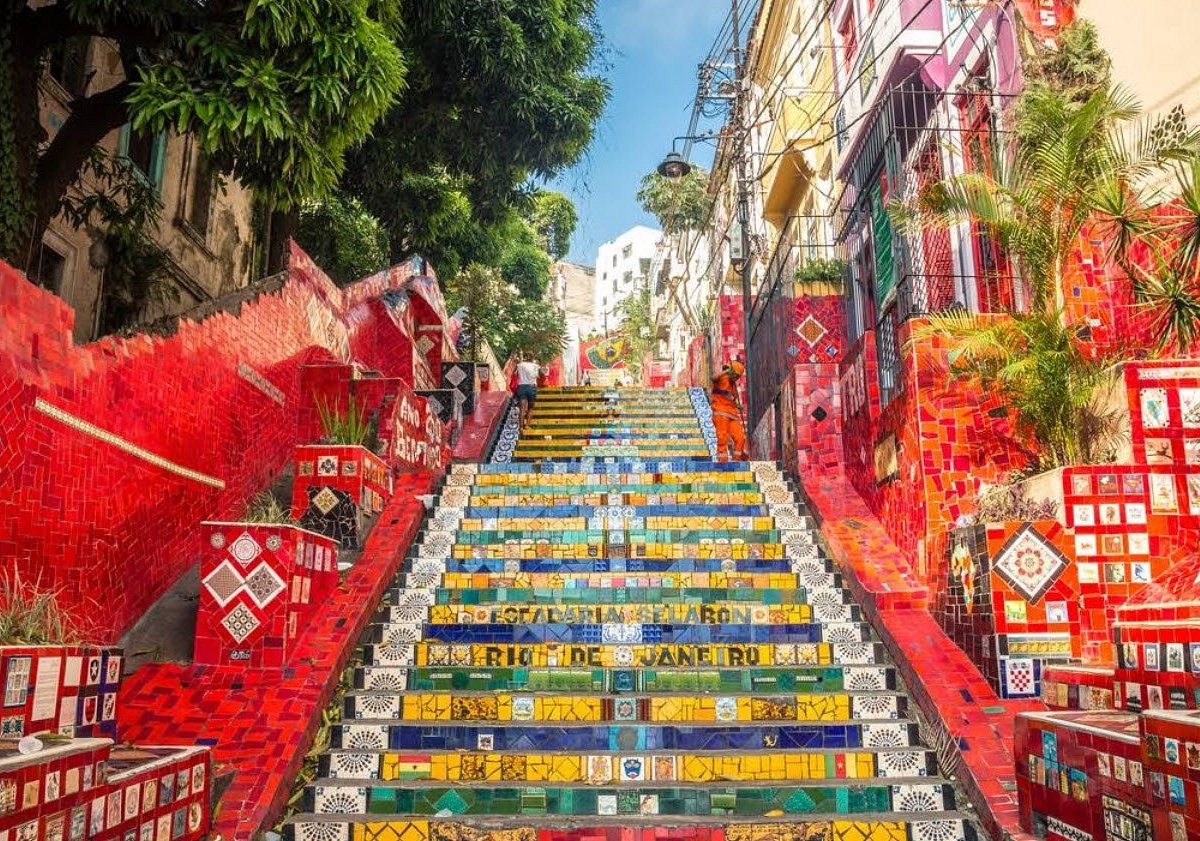
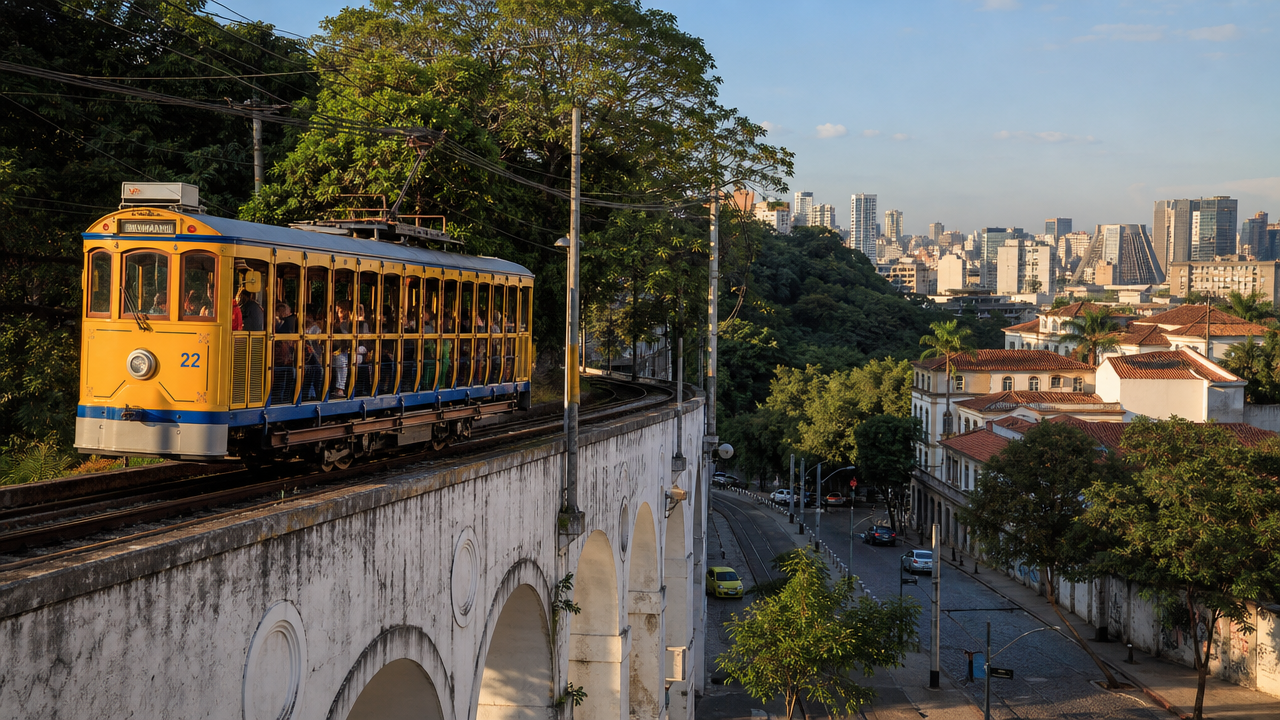
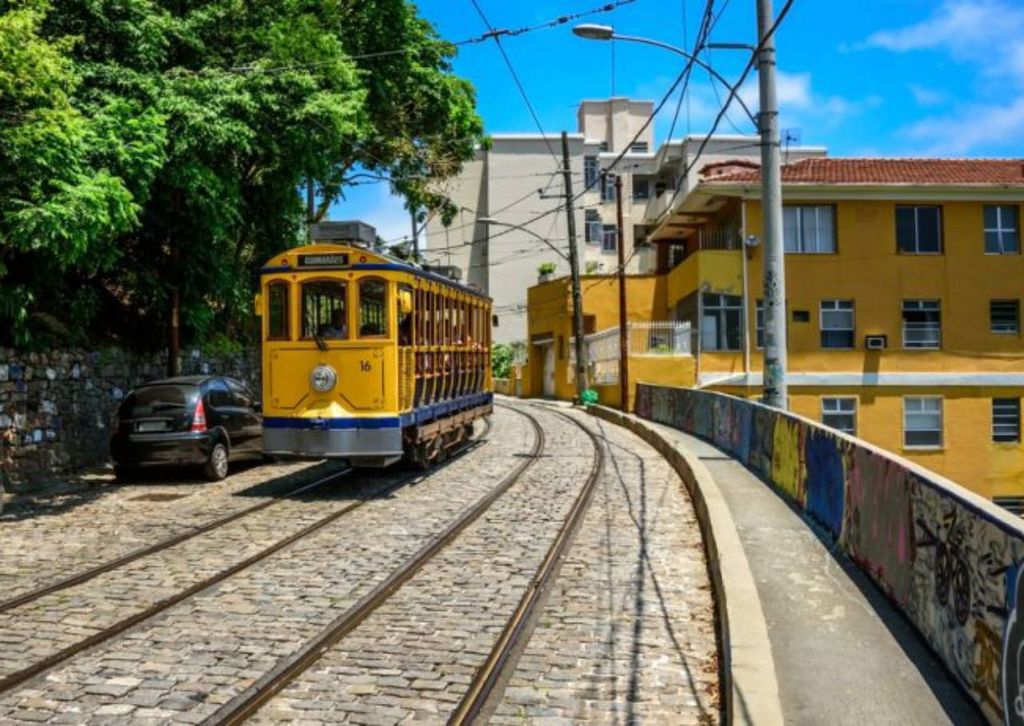
Yellow carriages climb cobbled hills, connecting Lapa's painted stairway to colonial charm above.
Hand-picked by our editors — only the best 4 experiences from 12 reviewed.
Verified partners for Santa Teresa Tram tours, free cancellation where available, and instant confirmation on every booking.
9 hr
Full-day adventure to Rio's iconic landmarks with optional Brazilian BBQ and panoramic cable car views
Reserve
7 hr
Seven-hour guided journey through Rio's most iconic landmarks, from mountaintop monuments to tropical jungle trails
Reserve
4 hr
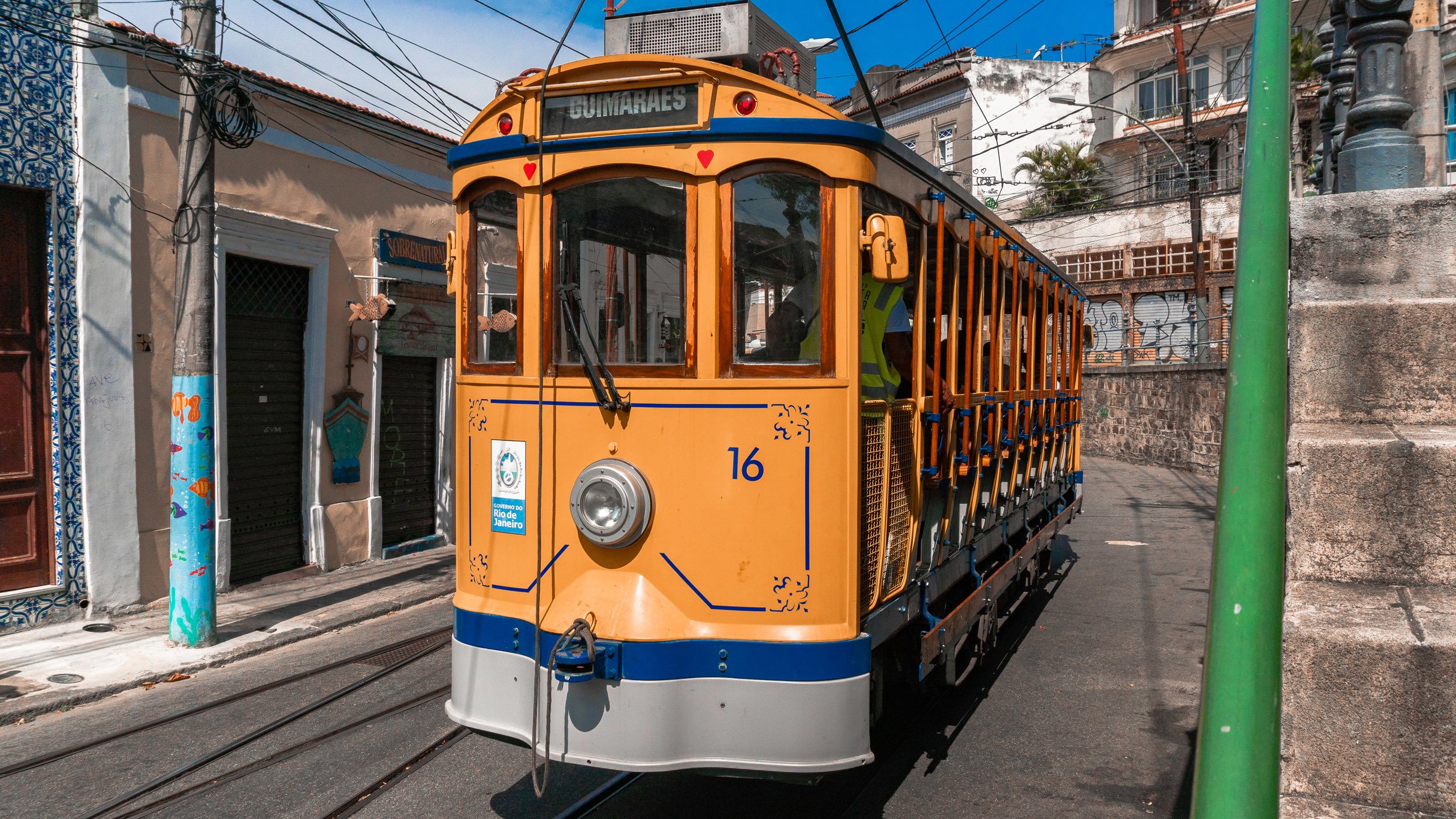
Ride Rio's historic tram through bohemian Santa Teresa, descend the iconic mosaic stairway, and explore downtown landmarks.
ReservePrices from verified partners. Availability updates in real time at checkout. Free cancellation policies apply where shown.
The landmarks, rooms, and views travelers on Santa Teresa Tram tours remember — all visible on a single visit.
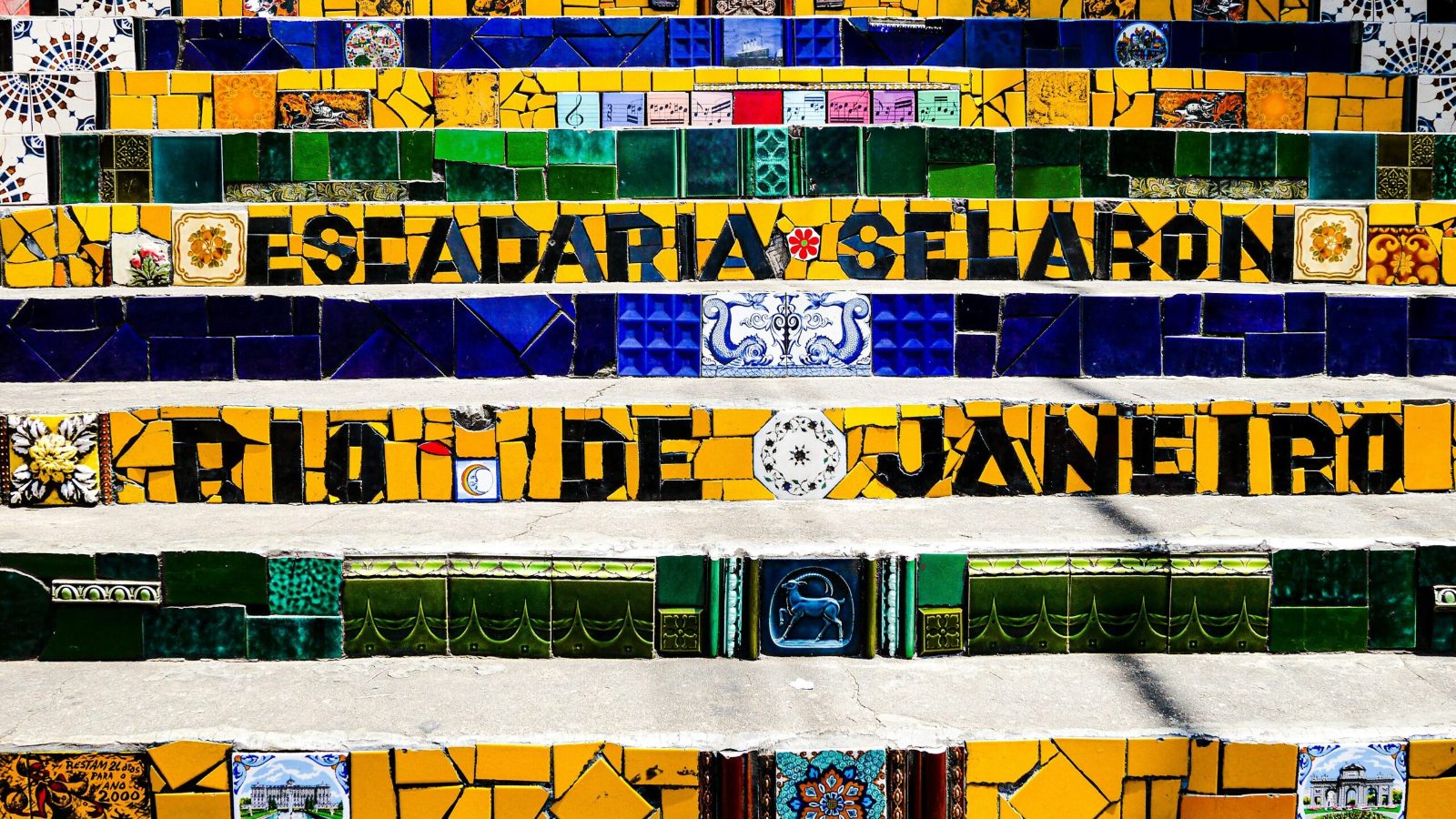
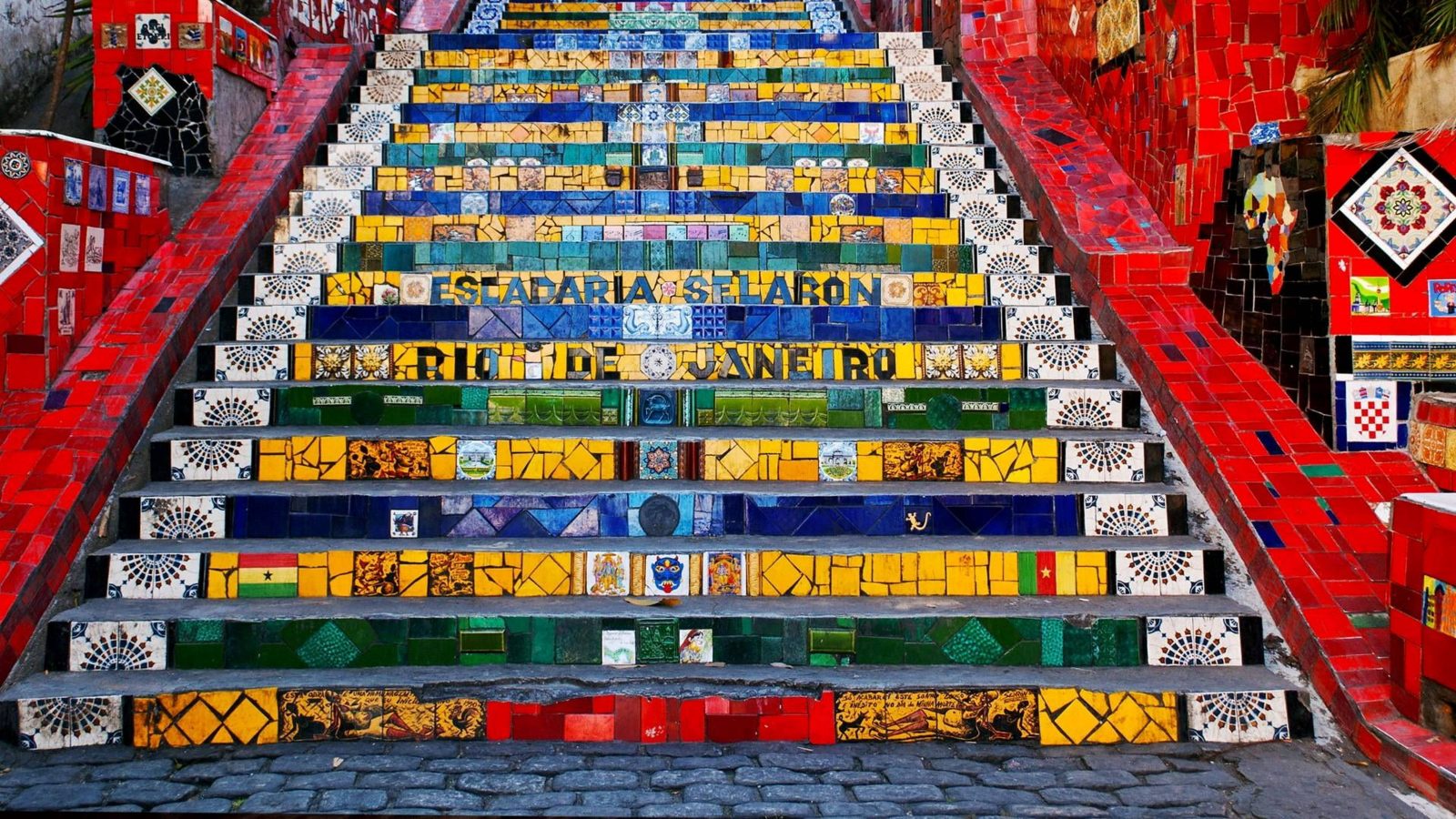
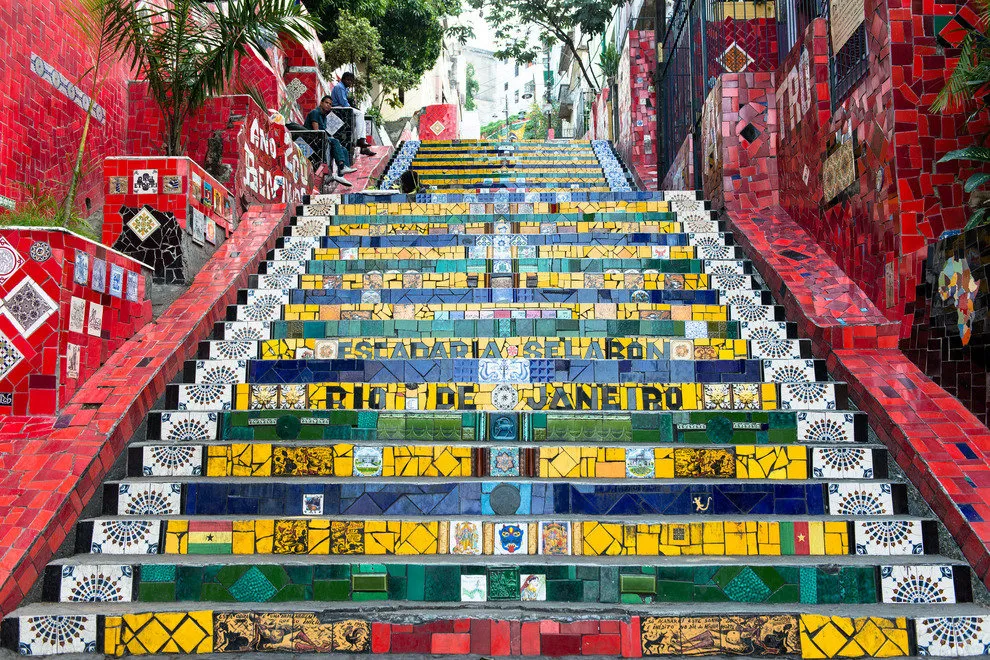
The most famous segment features tiles from over 60 countries and iconic red borders.
Look for tiles featuring the pregnant African woman, a recurring motif hand-painted by Jorge Selarón.
Located near the Lapa Arches, this serves as the primary starting point for most visitors.
The higher section offers a quieter atmosphere and different perspectives of the surrounding architecture.
These specific steps represent the original colors of the project: green, yellow, and blue.
Every Santa Teresa Tram tour side-by-side — duration, what's included, how you redeem.
| Experience | Duration | Rating | Pickup | Skip-the-line | Guide | Small group | Price | |
|---|---|---|---|---|---|---|---|---|
|
Guided Experience Most popular
Rio Highlights: Christ the Redeemer, Sugarloaf & Selarón Steps
|
9 hr | ★ 4.5 | ✓ | ✓ | ✓ | ✓ | €64 | Book → |
|
Guided Experience
Rio Highlights: Christ the Redeemer, Selaron Steps & Tijuca Rainforest
|
7 hr | ★ 4.8 | ✓ | ✓ | ✓ | ✓ | €63 | Book → |
|
Guided Experience
Santa Teresa Tram, Selarón Steps & Lapa Walking Tour
|
4 hr | ★ 4.5 | ✓ | ✓ | ✓ | ✓ | €61 | Book → |
All prices from verified partners. Availability and exact terms confirmed at checkout.
The Selarón Steps offer an immersive walk through iconic ceramic mosaic artistry, whereas the Bonde provides a scenic transit journey through Rio de Janeiro landmarks. Visitors often find that combining these experiences creates the most comprehensive look at local culture, though the tram serves as a more relaxing way to traverse the steep neighborhood terrain.
| Feature | Top pick Selarón Steps | Santa Teresa Tram |
|---|---|---|
Experience Type |
Public Art Installation | |
Primary Focus |
Ceramic mosaic visuals | |
Duration |
30–60 minutes | |
Physical Intensity |
High (215 steps) | |
Ticket Requirements |
Free entry | |
Historical Context |
Created by Jorge Selarón;Experience Type | Vintage rail transit |
Primary Focus |
Neighborhood scenic views | |
Duration |
45–90 minutes | |
Physical Intensity |
Low (seated) | |
Ticket Requirements |
Paid fare required | |
Historical Context |
Operational since 1877 | |
| See tickets → |
Verdict: Choose the steps if you prioritize photography and active exploration, or select the santa teresa tram tickets tour if you prefer a historical transit ride that covers more distance.
Choose your ticket, select your date, and reserve in under two minutes. Secure checkout handled by our verified partner.
Instant confirmation by email, with a mobile voucher you can save offline. No printing, no queuing at a collection desk.
Arrive at the entrance, show your voucher on your phone, and walk in. Most tickets include priority or skip-the-line access.
Practical details for Santa Teresa Tram tickets straight from our verified partners — hours, access, rules, and how to get there.
Wear comfortable, grippy footwear suitable for climbing uneven stone steps. There is no formal dress code, but modest clothing is recommended for visiting surrounding historic neighborhoods.
Keep all personal belongings secured and close to your body to avoid pickpockets. Avoid flashing cameras, smartphones, or jewelry while navigating between the Lapa district and the santa teresa tram tickets site.
Photography is permitted and encouraged at this iconic landmark. Early morning visits are recommended for santa teresa tram tickets tours to capture clear shots without crowds.
The staircase consists of 215 steps and is not wheelchair accessible. Individuals with mobility issues should view the artwork from the bottom in Lapa or the top near the santa teresa tram tickets route.
Mobile phones are permitted for photos. Use caution when using them in public areas; consider using a tether or keeping your device in a secure pocket when not capturing santa teresa tram tickets images.
The attraction is open to families, though children should be supervised closely due to uneven surfaces. Using a carrier instead of a stroller is highly advised for santa teresa tram tickets families.
Local vendors sell drinks and snacks nearby. Be prepared to carry out your own trash to keep the area clean for other travelers taking santa teresa tram tickets tours.
Pets are permitted on a leash in this outdoor public space. Ensure your pet is comfortable navigating steep, potentially crowded stone stairs if attempting santa teresa tram tickets tours.
The staircase is an evolving art project. Please respect the tiles and refrain from removing pieces or leaving graffiti, as this is a protected cultural heritage site.
Best time to go, insider tips, nearby landmarks, and the cancellation fine print — flip through to skim what matters to you.
Flexible, no hidden fees.
The attraction is a public space with no entrance fee or ticket requirement. Tours booked through third-party operators often offer free cancellation up to 24 hours before the santa teresa tram tickets tour start time.
The yellow tram cars of Santa Teresa have rattled over the Lapa Arches since 1896, making them among South America's oldest electric streetcars still in regular service.
Suspended service after a 2011 accident returned the line in 2015 with restored Belle Époque carriages, heritage preservation protocols, and a route that climbs from the base of the Selarón Steps through switchback curves to the hilltop enclave where artists and bohemian cafés occupy 19th-century mansions. The open-sided bondinho covers 6 kilometers in 22 minutes, crossing the Carioca Aqueduct's twin-tiered arches — themselves completed in 1750 to carry mountain water to colonial Rio — before ascending Rua Joaquim Murtinho's steep gradient past colonial-era street lamps and wrought-iron balconies.
Santa Teresa tram tickets tours begin at the Carioca terminal adjacent to Rua Manuel Carneiro, where Jorge Selarón's 215-step mosaic staircase connects Lapa's nightlife district to the quieter residential blocks above. The tram line itself functions as both public transit and heritage experience, ferrying local residents alongside visitors who board for the panoramic bay views and the chance to ride open wooden benches through one of Rio's last intact colonial neighborhoods. The route passes Parque das Ruínas — the skeletal remains of heiress Laurinda Santos Lobo's mansion, now an open-air cultural venue — and the Chácara do Céu museum, which houses modernist paintings by Di Cavalcanti and Portinari within a mid-century villa overlooking Guanabara Bay.
The bondinho operates on a single track with passing sidings, requiring precise scheduling and conductor coordination at each turnaround point. Restoration efforts replaced original 1896 components with period-accurate reproductions while installing modern braking systems and wireless communication between drivers. The Santa Teresa tram tickets price structure includes free public access, though private heritage tours and after-hours charters operate through licensed operators who coordinate with Rio's municipal transit authority. Peak congestion occurs mid-morning and late afternoon when commuters join tourists; early rides between six and nine allow unobstructed photography of the aqueduct arches backlit by sunrise.
The district itself predates the tram by two centuries, settled initially by Carmelite nuns who established the Santa Teresa Convent in 1750. Coffee barons built weekend estates here during the 19th-century imperial period, attracted by elevation that offered relief from yellow fever outbreaks in the lowland port. Those estates fragmented into smaller parcels after abolition in 1888, creating the dense urban fabric of narrow streets and hidden courtyards that defines the neighborhood today. The tram's survival through decades of automotive modernization reflects both engineering durability and cultural attachment — Rio residents refer to the line simply as "o bondinho," the little tram, a diminutive that conveys affection rather than dismissal.

"The yellow tram cars of Santa Teresa have rattled over the Lapa Arches since 1896, making them among South America's oldest electric streetcars still in regular service."
A step-by-step walkthrough of Santa Teresa Tram tickets — what you'll see, how long each stage takes, and the details that matter.
You approach the Carioca terminal at the base of the Selarón Steps, where yellow tram cars idle on twin tracks beneath the Lapa Arches' whitewashed stone. Boarding requires no advance reservation for the public service — you step directly onto varnished wooden benches, open windows framing the street on both sides.
The conductor rings a brass bell twice, and the bondinho jerks forward with the mechanical hum of electric motors engaging century-old gears.
The climb begins immediately. You cross the aqueduct's upper tier, suspended 17 meters above Rua dos Arcos, with views stretching east toward the port cranes of Zona Portuária. The tram rocks gently as it negotiates the first switchback on Rua Joaquim Murtinho, slowing to 8 kilometers per hour through a corridor of jacaranda trees and wrought-iron gates. Passengers lean out to photograph colonial doorways painted in ochre and powder blue.
At Largo das Neves, the tram pauses at a passing siding while the southbound car descends. You continue uphill past the Parque das Ruínas' skeletal arches on your right, then reach the Curvelo terminus where the track ends in a turning loop. The entire ride spans 22 minutes. Stepping off, you're in the heart of Santa Teresa's residential quarter, where cobblestone alleys descend toward hidden staircases and neighborhood bakeries selling pão de queijo from wire baskets.
No, you do not need santa teresa tram tickets to visit the Selarón Steps; the site is a free public space.
The stairs are open 24/7, though visibility is best during daylight hours.
There is a 0 BRL entrance fee, making it accessible to everyone interested in santa teresa tram tickets tours.
The staircase features 215 steps that connect the Lapa and Santa Teresa neighborhoods.
Visit between 06:00–09:00 to avoid peak crowds and enjoy a better experience with your santa teresa tram tickets tickets.
The area is generally safe during the day, but visitors should remain vigilant of their belongings and avoid quiet corners at night.
Yes, the Santa Teresa tram (Bondinho) is a classic way to arrive near the top of the stairs while using your santa teresa tram tickets.
Guided tours are excellent for learning the history of the tiles and ensuring safety, often including santa teresa tram tickets tours.
Wear comfortable, non-slip shoes and bring water, as there is significant climbing involved in santa teresa tram tickets tours.