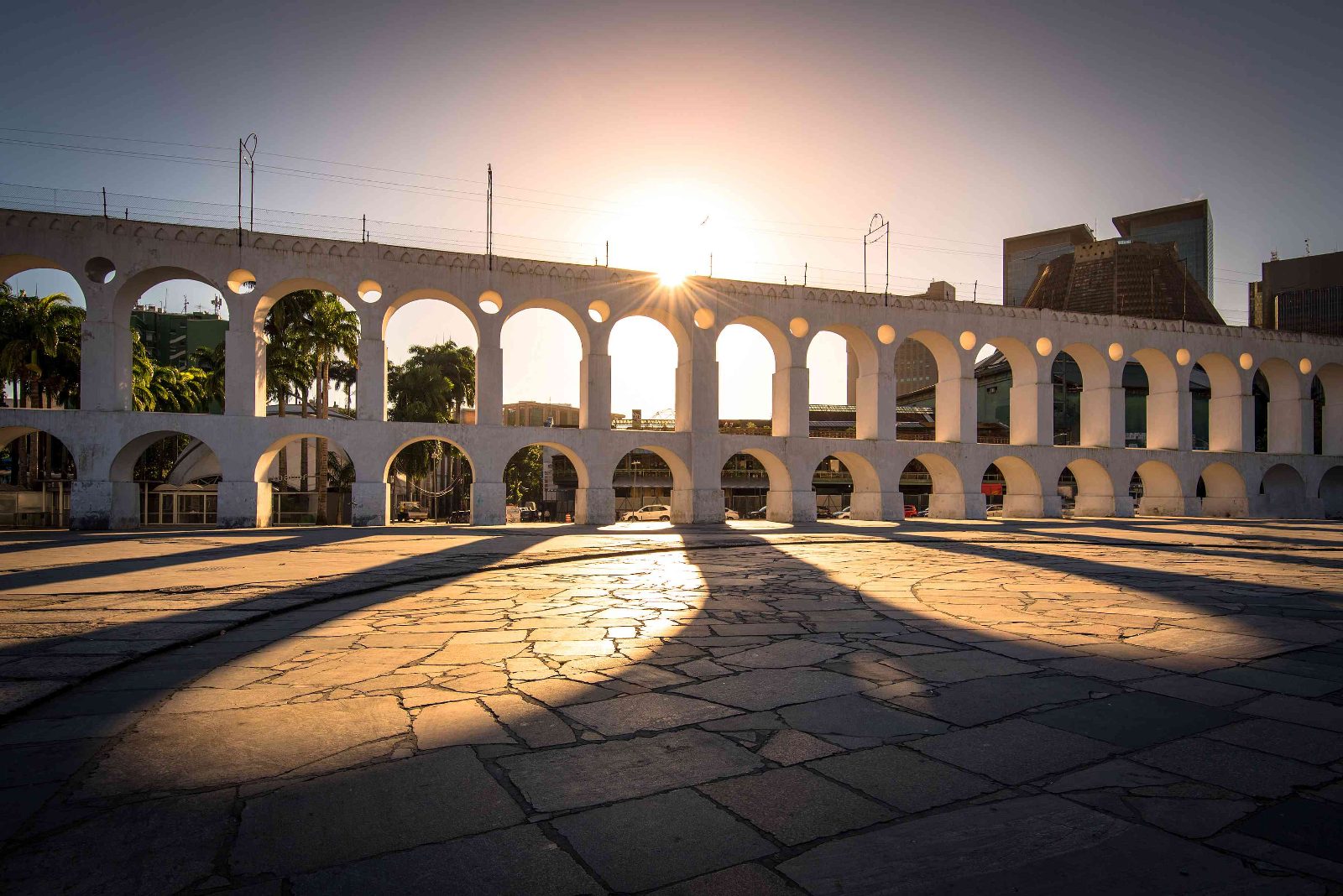
Lapa Arches
8 min walk
These historic 18th-century aqueducts define the district skyline and offer a historical perspective on Rio's colonial infrastructure.

The Santa Teresa tram terminal marks the lower boundary of the Selarón Steps, where Rio's century-old yellow streetcar system meets one of the city's most photographed landmarks. This transit point serves as both a practical gateway to Santa Teresa's hillside neighborhood and the natural starting line for the 215-step climb through Jorge Selarón's mosaic masterpiece.

Quick answer
The Santa Teresa tram terminal sits at Rua Manuel Carneiro in the Lapa district, directly at the base of the Selarón Steps. The terminal operates around the clock, seven days a week, and serves as the primary access point for visitors combining a historic tram journey with the 215-step mosaic staircase. Entry to the steps themselves is free, making this one of Rio's most accessible landmark connections.
The yellow tram that rolls to a stop at Rua Manuel Carneiro has been making this same journey since 1896, though the mosaic staircase that now defines the terminal's identity didn't exist until Chilean artist Jorge Selarón began his obsessive tile work in 1990. The juxtaposition is deliberate: a Belle Époque transit system preserved almost unchanged, meeting a contemporary folk-art monument that has itself become a Rio icon. The santa teresa tram terminal functions as more than a stop on the bondinho route. It anchors the Lapa district's eastern edge, where the flat colonial center yields to the steep climb toward Santa Teresa. Visitors arriving by metro, bus, or on foot converge here, using the terminal as a landmark to orient themselves before beginning the ascent. The tram itself runs infrequently and serves a limited route, so most travelers treat the terminal as a reference point rather than a departure gate. The 215 steps begin immediately adjacent to the terminal, rising in a nearly vertical line toward the Convent of Santa Teresa. Selarón embedded more than 2,000 tiles into the staircase over two decades, sourcing fragments from sixty countries and working without funding or official permission. The result is a continuous mosaic that shifts in color and density as you climb, each landing revealing new tile arrangements and sightlines back toward the terminal and Lapa's arches. Early morning arrivals between six and eight o'clock find the terminal and steps nearly empty, a rare state for a site that draws thousands daily. The low-angle light at that hour illuminates the tilework without the harsh contrast of midday sun, and the absence of crowds allows unobstructed photography. By nine o'clock, tour groups arrive in waves, and the steps become a slow procession. The terminal itself remains open continuously, though the tram schedule is irregular and subject to maintenance closures. The steps require no ticket, no reservation, and no advance planning beyond choosing when to arrive.
“The yellow tram that rolls to a stop at Rua Manuel Carneiro has been making this same journey since 1896, though the mosaic staircase that now defines the terminal's identity didn't exist until 1990.”
The optimal period to visit the Selarón Steps is the early morning arrival window of 06:00–08:00. This timeframe is the only opportunity to experience the site without heavy tourist influx and offers superior lighting for photography.
—
Visiting on weekdays before 08:00 ensures the most space for photography and movement. This slot avoids the high volume of visitors typically present by mid-morning.
Hot and humid (25–35°C)
Early morning hours remain essential during these months to avoid the heat and the largest daily crowds. Mid-day visits often coincide with significant tour group activity.
Mild and pleasant (18–25°C)
Weather is cooler, making early morning exploration comfortable. Crowds are smaller than in summer but remain present throughout the day.
Verdict: The best slot is Tuesday to Thursday between 06:00 and 08:00 during the months of April or October to balance favorable weather and lower crowd density.
The Selarón Steps are a public landmark, meaning access is free for all visitors at all times. No tickets or reservations are required for entry.
Verdict: Visitors pay 0 BRL for entry, as there are no admission fees or ticket requirements for this site.
The Selarón Steps near the Santa Teresa tram terminal remain open to the public daily throughout the week.
The Selarón Steps are located at Rua Manuel Carneiro, Santa Teresa, Rio de Janeiro - RJ, Brazil. The area is most easily accessed by combining a ride on the Santa Teresa Tram (Bonde de Santa Teresa) with a short walk to the base of the steps.
Line 1 or 2 to Carioca Station
Santa Teresa Tram (Bonde) to Largo do Curvelo
Walk from Lapa district to Rua Manuel Carneiro
Alight at the Carioca station to access the tram terminal, then proceed to the Selarón Steps, which feature 215 steps for the full ascent.
The Selarón Steps span 215 tiles from Rua Joaquim Silva at the base to Rua Pinto Martins at the top, typically taking 10–15 minutes to navigate at a comfortable pace. The route is straightforward but uneven, with each section offering different tile compositions and vantage points.
The steps begin at the corner where Rua Joaquim Silva meets Ladeira de Santa Teresa, marked by the transition from street pavement to colorful ceramic tiles. Many visitors miss the unmarked start and walk past it—look for the abrupt shift in surface texture.
This lower section features the densest concentration of blue and yellow tiles, with the steepest incline of the entire climb. The tiles here are smooth from high foot traffic, so grip the side rail during wet conditions.
The middle 100 steps widen slightly and display the broadest range of tile styles, including ceramic portraits and donated pieces from over 60 countries. This is the primary photo zone, so expect slower movement during peak hours.
The upper 65 steps narrow again and curve left, with older, more weathered tiles that predate the 2000s expansions. The exit deposits you directly at street level in Santa Teresa, adjacent to the tram line.
The area surrounding the Selarón Steps serves as a transition point between the urban center and the historic Santa Teresa neighborhood. These nearby locations complement a visit by providing cultural and architectural context to your journey.
8 min walk
These historic 18th-century aqueducts define the district skyline and offer a historical perspective on Rio's colonial infrastructure.

2 min walk
Continuing past the main tiled steps leads to quieter residential alleys that reveal local artist studios and viewpoints.
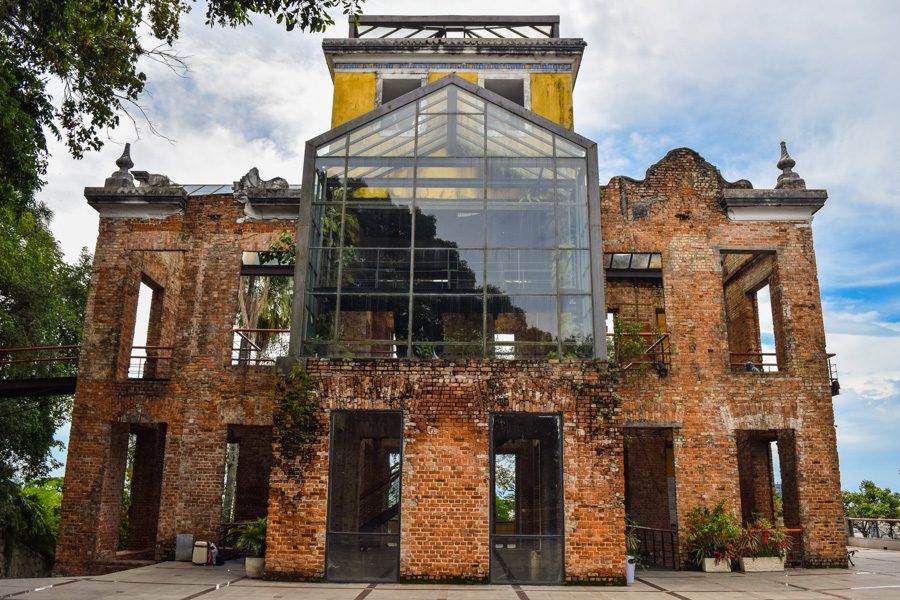
15 min walk
This cultural center features the remains of a mansion with a viewing platform that looks out over Guanabara Bay and the city center.
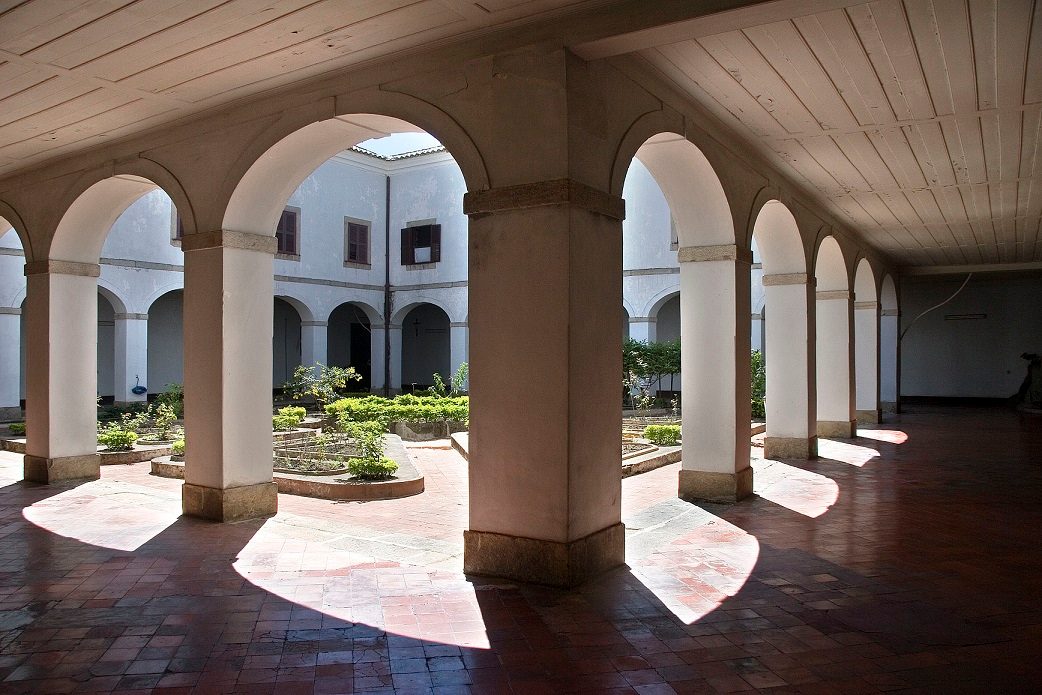
12 min walk
Located further up the hill, this convent provides a sense of the neighborhood's religious heritage and early colonial architecture.
Everything you need to know about santa teresa tram terminal
The entrance fee is 0 BRL, as this is a public space. You can enjoy the mosaics without any cost.
While the santa teresa tram terminal is a transport hub, you will need to walk a short distance from the station to reach Rua Manuel Carneiro. The steps are located within the Santa Teresa neighborhood, which the tram connects to the city center.
The best arrival window is 06:00–08:00 to avoid heavy tourist crowds. Visiting early also provides the best lighting for photography of the colorful tiles.
There are 215 steps to climb when accessing the site. This allows visitors to fully experience the vibrant tile work created by Jorge Selarón.
The site is accessible 24 hours a day, seven days a week. You may visit any time between 00:00 and 23:59.
Yes, the area is well-connected to various Rio de Janeiro landmarks. Using the santa teresa tram terminal facilitates easy transit between the historic hillside neighborhood and central areas.
There is no formal ticket system for the steps themselves, so the concept of skip-the-line does not apply. You simply arrive and walk the path at your own pace.
The Santa Teresa Tram Ride Experience
Read more GuideHow to Get to Santa Teresa
Read more GuideSanta Teresa Tram Visitor Guide
Read more GuideWhere to Get Off the Santa Teresa Tram
Read more GuideThings to Do in Santa Teresa
Read more GuideSanta Teresa Tram Times & Schedule
Read more GuideSanta Teresa Tram Ticket Prices & Info
Read more Tickets & toursGuided Santa Teresa Tram Tours
Read more